How Clinic-Ready Manufacturing and Adaptive Clinical Trials Can Reduce Drug Development Timelines
The complexities of active pharmaceutical ingredient (API) formulation, product testing, and documentation requirements can hinder the speed at which a promising drug candidate progresses to and through clinical trials. However, partnering with an integrated CRO and CDMO to leverage clinic-ready and pharmacy-on-demand manufacturing can significantly streamline the process. In this way, trial-specific drug formulations can be delivered directly to clinical sites.
In this blog, we explore how clinic-ready manufacturing and adaptive clinical trials work together to streamline drug development—and how on-demand formulation, integrated manufacturing, and real-time protocol adjustments can avoid delays, optimize resources, and ensure regulatory compliance from early-phase trials onward.
What is Clinic-Ready Manufacturing?
Clinic-ready manufacturing is a strategic approach to drug development that focuses on preparing manufacturing processes and, when necessary, formulation, for the demands of clinical trials from the outset of a program. GMP-aligned workflows and pharmacy-on-demand capabilities located at or near clinical sites, can accelerate development timelines and eliminate common bottlenecks associated with scaling from laboratory concepts to trial-ready materials.
Close coordination between CDMOs and clinical teams ensures safety, compliance, and real-time adaptability throughout development. Integrating adaptive trial designs with clinic-ready manufacturing and pharmacy-on-demand enables rapid, GMP-controlled formulation and dosing adjustments as study needs evolve. This tight feedback loop improves operational efficiency, supports faster, data-driven decision-making, and reduces delays—providing the agility clinical trials require to stay on schedule.
What are the Benefits of Clinic-Ready Manufacturing?
By producing trial-specific doses on demand, we avoid overproduction, thereby conserving your valuable APIs. This ensures that your resources are used efficiently and sustainably, and as a result, production of clinical trial supplies is quicker and more reliable, for a smoother progression into the early clinical phases.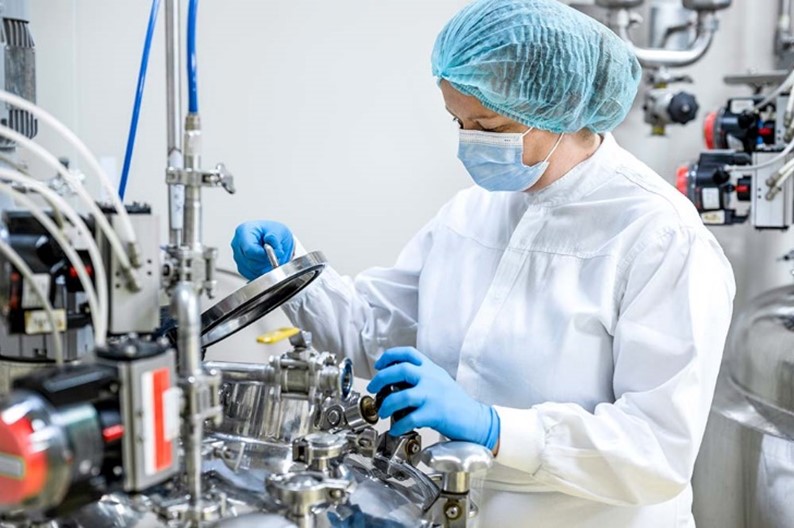
Aligning GMP-ready manufacturing and CMC activities early also enables clearer, regulator-ready documentation and the short-term stability data needed for early-phase trials. This alignment lessens CMC-related review questions and mitigates the risk of delays in regulatory reviews.
Robust quality control measures and thorough early stability data help ensure consistent production, minimizing the likelihood of batch failures.
Altogether, these capabilities maintain the integrity of your clinical trial results while enabling flexible resource allocation, and faster transitions to full-scale manufacturing when a final formulation is defined
The Perfect Union: Adaptive Clinical Trials and Clinic-Ready Manufacturing
Adaptive clinical trials is a flexible approach that allows modifications based on interim results, thereby optimizing the use of resources and time. Unlike traditional trial designs, adaptive trial designs mean that teams can review results at planned points throughout the study and make informed adjustments, making it possible to identify (and rectify) issues earlier, improve participant safety, and focus resources on the most promising results.
For example, if interim trial data indicates a change in dose strength or formulation is needed mid-study, on-demand pharmacy services enable rapid compounding and delivery of the study drug—without the delays of large-scale batch production. Or if early data suggests a dose isn’t effective or isn’t well tolerated, your study team can make other modifications, such as shifting participants or ending a study arm. In this way, manufacturing and formulation are closely aligned with study needs. Real-time preparation of new dose strengths, formulation adjustments, or fresh batch production ensures that trials continue without unnecessary delays or excessive API consumption.
In short, an on-demand and adaptive strategy maintains a flexible drug supply, rather than relying on large batches manufactured far in advance, which minimizes waste, shortens turnaround times, and enables early-phase dosing to be responsive to emerging data.
Ensuring Accurate Documentation and Stability Data
Inadequately managed documentation and stability data, especially during clinical trials, can lead to significant setbacks and delay market entry. Adaptive clinical trials, however, enable constant coordination among the project manager, clinical pharmacy, and CDMO. Obtaining extended stability data for investigational products during trial conduct can be facilitated with proper oversight and a coordinated effort between scientific teams and departments.
Importantly, this flexibility hinges on the study being formally designed as adaptive within the protocol. Without adaptive language built in from the start, any formulation or dosing adjustment would require a protocol amendment or IRB notification, triggering administrative delays that can unnecessarily extend study timelines. Ensuring adaptive provisions upfront prevents these avoidable disruptions and preserves the speed and efficiency that clinic-ready manufacturing is intended to support.
By integrating manufacturing and clinical teams early, challenges associated with obtaining extended stability data can be reduced. Short-term stability data, often sufficient for early-phase adaptive dosing and on-demand preparations, can be generated efficiently. Teams can define packaging components, incorporate them into stability protocols, and apply real-time feedback from the clinic to prevent unexpected issues.
This close coordination also ensures that all compounded preparations, whether sterile or non-sterile, are produced in accordance with USP 795 and USP 797 standards, with testing, labeling, and documentation keeping pace with trial adjustments.
In the podcast episode, “Successful Manufacturing of Clinical Trial Supply”, Dr. Kevin Kirkcaldy, Director of Pharmacy Operations at Altasciences, explains:
“Since our CDMO colleagues have expertise in clinical trials and work closely with the pharmacy team, we can ensure that the labeling and supporting documentation meet all clinical trial requirements.”
Collaborative efforts can prevent potential setbacks and maintain consistency and compliance across various trial stages. Through integrated clinical and manufacturing solutions, risks are diminished by providing flexibility in how API are compounded, tested, and prepared for patient administration.
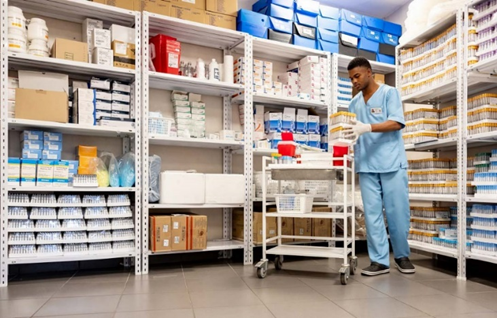
The ability to compound and ship under GMP conditions, while maintaining open communication, not only ensures compliance but also expedites timelines, leading to more efficient and effective clinical trials.
Clinic-Ready Manufacturing at Altasciences
With clinic-ready manufacturing, pharmacy on-demand capabilities, and adaptive clinical trial designs, we deliver efficient, high-quality results for your drug development program. We operate three clinical units across Canada and the U.S., with a strategically located CDMO facility in Philadelphia, ensuring seamless coordination across sites and phases. Our manufacturing and clinical teams maintain constant communication through weekly and biweekly meetings, enabling real-time progress reviews and strategy adjustments. This close collaboration swiftly identifies and lessens potential roadblocks, limiting disruptions to your overall development timeline.
Want to know more about how our on-demand manufacturing approach can lower costs and accelerate your study timelines? Connect with one of our experts.
This blog was originally published in January 2026.